Deep Healing Journal Prompts: A Practical Guide for Your Inner Journey
You know the feeling. You sit down with a blank notebook, ready to do the inner work. You want to process a tough day, understand a recurring reaction, or simply feel more grounded. But then the cursor blinks or the page stares back at you, and your mind goes blank. The desire is there, but the starting point isn't. This is exactly where a structured tool like the Deep Healing Journal Prompts collection becomes genuinely useful. It removes the friction of "what do I write about?" and hands you a clear, compassionate roadmap.
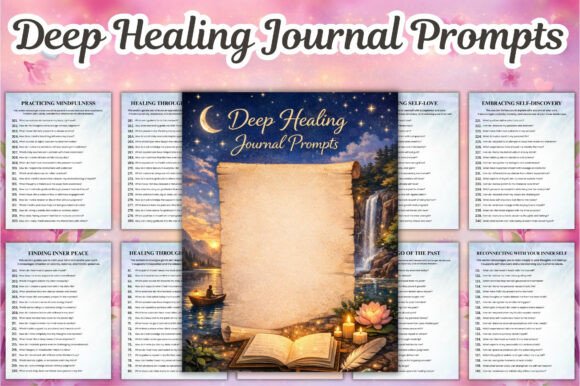
This isn't just a random list of questions. It is a carefully organized set of 300 prompts divided into themes that support real emotional work: emotional release, self-compassion, forgiveness, resilience, mindfulness, and inner growth. For anyone navigating the messy middle of personal development, this structure makes the difference between spinning your wheels and making tangible progress.
Why Thematic Prompts Beat Blank Pages Every Time
Most people abandon journaling not because they lack motivation, but because they lack direction. Writing "How do I feel?" every day quickly becomes repetitive. The Deep Healing Journal Prompts collection solves this by grouping questions into specific emotional and psychological territories. This matters because healing is rarely linear. Some days you need to practice self-compassion. Other days, you need to confront what needs to be released.
When you have a dedicated section for letting go and forgiveness, for example, you aren't just venting. You are engaging in a targeted reflective practice that helps you untangle specific knots. Similarly, the emotional resilience and growth prompts are designed to help you reframe challenges, which is a core skill for anyone juggling high demands at work or in personal life. The structure guides you toward deeper reflection than you might reach on your own.
Where and When People Actually Use These Prompts
The versatility of this collection comes from its practicality. It works across different lifestyles and schedules because it adapts to you, not the other way around.
The Overloaded Professional or Entrepreneur
If your calendar is packed with meetings, client calls, and deadlines, emotional clarity often takes a backseat. But carrying unresolved stress directly impacts your decision-making and leadership. A common use case here is the five-minute morning prompt. Before you open your email, you pull up the PDF or your printed page and answer one question from the inner peace and mindfulness section. Something like, "What intention can I set today that prioritizes my well-being?" It reorients your nervous system before the chaos begins. For the entrepreneur carrying the weight of their business alone, the letting go and forgiveness prompts can be surprisingly effective for releasing the emotional toll of past failures or difficult client relationships.
The Creator or Marketer Facing a Block
Creative blocks are rarely about a lack of ideas. They are often about a buildup of self-doubt, comparison, or unprocessed emotion. Using the self-compassion and self-love themes can directly dismantle the inner critic that shuts down your flow. A blogger or content creator might use the emotional reflection and self-discovery exercises to identify the core narrative they are afraid to write. Once that emotional knot is loosened, the writing often flows naturally. This turns the journal from a personal wellness tool into a professional clarity tool.
Anyone Navigating a Major Life Transition
Breakups, career shifts, moving to a new city, or recovering from burnout all demand a high level of emotional processing. During these times, your mind tends to loop. The emotional release prompts give you a structured way to drain the pressure. Instead of rehashing the same story to friends or lying awake worrying, you sit down for ten minutes and write through a guided question. The act of writing it down, in a focused way, often brings a sense of relief and perspective that rumination cannot provide.
Building a Daily Self-Care Ritual
Consistency is the secret to long-term change. The Deep Healing Journal Prompts collection is sized and structured to fit into a daily ritual. Because you don't have to flip through hundreds of pages to find a good question, you can reach for the mindfulness section as part of your evening wind-down. Pairing a single prompt with a cup of tea or a few minutes of quiet creates a repeatable anchor for your day. Over weeks and months, this small habit builds significant emotional awareness and balance.
Translating Features into Real Outcomes
The practical design of this journal matters more than you might think. Here is how the format choices support real, consistent use:
- Instant Download (PDF, JPG, PNG, Canva Link): This means you can start the same day you feel the need. There is no waiting for shipping. If you are in the middle of a difficult week, you can access the prompts immediately. The Canva link is particularly useful if you prefer a digital, beautifully formatted space to type your answers, or if you want to customize the look to match your personal aesthetic.
- Printable and Digital-Friendly: Some people think best with pen and paper. The print-ready format allows you to create a physical binder or notebook. Others prefer to keep everything on their iPad or laptop. The multiple formats (PDF, JPG, PNG) ensure you aren't locked into one workflow. You can upload the JPGs to GoodNotes, Notion, or your favorite note-taking app.
- Themed Sections for Targeted Work: Instead of a jumble of questions, the prompts are organized. This allows you to pick the section that matches your current need. Feeling emotionally fragile? Turn to the self-compassion pages. Feeling stuck in resentment? The forgiveness section is right there. This targeted approach increases the therapeutic value of each session.
What to Consider Before You Begin
Approaching a deep healing practice requires a little bit of practical wisdom. Here are a few things to keep in mind to get the most out of the experience.
Healing is not linear. Some prompts will feel easy and clarifying. Others might bring up unexpected waves of emotion. The prompts are designed to create a safe container for this, but it is important to be gentle with yourself. If a question feels too heavy, it is perfectly okay to skip it and come back later. The goal is progress, not perfection.
Consistency matters more than intensity. Writing for ten minutes every day will yield far more change than writing for two hours once a month. The structure of this collection makes short sessions effective because the prompt does the heavy lifting of focusing your thoughts. A single prompt answered honestly in five minutes can change the direction of your entire day.
Know the limits of journaling. This is an excellent tool for self-reflection, emotional processing, and mindfulness practice. It is a companion for your wellness journey. If you are dealing with severe trauma, crisis, or clinical depression, please seek support from a licensed mental health professional. Journaling works best alongside professional care, not as a replacement for it.
The cover page is fixed. This is a small but important detail. The internal prompts and sections are fully accessible, but the cover design itself is not editable. If you are someone who customizes every aspect of your journal, knowing this upfront helps set the right expectation.
Making This Collection Work for Your Life
The real power of the Deep Healing Journal Prompts lies in its adaptability. A busy parent might print a few pages and keep them in the car for a quiet moment before school pickup. A solopreneur might keep the Canva link open in a browser tab for a mid-afternoon reset. A therapist or coach might use specific sections as gentle homework for clients exploring emotional resilience or self-awareness.
You don't have to use it perfectly. You don't have to complete all 300 prompts in order. You can flip directly to the section that mirrors what you are feeling right now. That freedom, combined with the structure, is what makes it a genuinely useful resource for anyone serious about personal growth. The work of healing is a long game. Having a trusted, practical tool in your corner makes the journey feel far less lonely and far more achievable.