Evaluating the 5K ChatGPT Prompt Bible: Format, Fit, and Practical Tradeoffs
With the growing interest in generative AI, many professionals, creators, and self-development enthusiasts are turning to structured prompt collections to get more consistent, thoughtful outputs from tools like ChatGPT. Among the available resources, the 5K ChatGPT Prompt Bible stands out as a sizable, ready-to-use library of 5,000 prompts organized into a 252-page workbook. But how does it compare with other approaches to prompt curation, and what factors should you weigh before committing to this type of resource? This article offers a balanced look at what the 5K ChatGPT Prompt Bible provides, where it fits best, and what tradeoffs you might consider depending on your workflow and goals.
What the 5K ChatGPT Prompt Bible Offers at a Glance
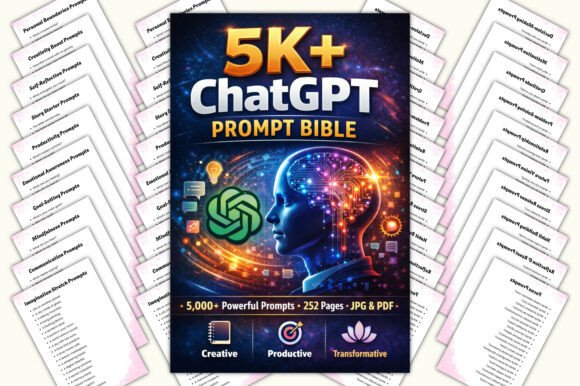
The 5K ChatGPT Prompt Bible is essentially a large, structured collection of prompts designed to spur creativity, reflection, productivity, and personal transformation. Presented in a 6×9-inch workbook format, it includes 252 professionally formatted pages with clean, minimal layouts. You receive both JPG files and a print-ready PDF, plus a Canva link for further customization. The prompts are grouped around themes such as journaling, brainstorming, mindset training, self-discovery, and productivity systems.
What makes this resource distinct is not just the sheer quantity of prompts—5,000 is a substantial library—but also the deliberate structure. Each page is built to reduce friction: you open a page, read a prompt, and begin writing or thinking. The design encourages repeated use over time, which is valuable for anyone building a daily reflection or idea-generation habit.
How the 5K ChatGPT Prompt Bible Compares with Other Prompt Resources
When evaluating the 5K ChatGPT Prompt Bible, it helps to look at the broader landscape of prompt collections. Many resources exist, ranging from free online lists to premium digital products, and they differ in three main ways: quantity versus quality, structure versus flexibility, and format suitability.
Quantity and Curation Depth
A common alternative to a large workbook like this is a curated list of 50–200 prompts focused on a single niche, such as copywriting prompts for marketers or therapeutic journaling prompts for coaches. Those smaller collections often go deeper into a specific use case, offering context, examples, and variations. In contrast, the 5K ChatGPT Prompt Bible covers a broad range of categories, which makes it a generalist resource. If you need prompts for many different situations—creative writing, goal setting, self-reflection, problem-solving—this breadth can be a strength. However, if you only need prompts for one specialized area, a smaller, more focused collection might serve you better without the extra volume to sift through.
Format and Workflow Integration
Another key distinction is how prompts are delivered. Some resources are digital-only spreadsheets or Notion databases, which allow you to search, filter, and sort prompts instantly. Others are printed books or PDFs meant for offline use. The 5K ChatGPT Prompt Bible takes a middle path: it gives you a PDF and JPGs that work on screens or in print, plus a Canva link if you want to customize layouts. The 6×9 page size is compact enough for a notebook shelf or a tablet screen. For someone who prefers analog methods—printing pages and writing by hand—this format is ideal. But if you prefer a fully searchable digital library that you can query on the fly, a spreadsheet or database might be more efficient.
Structure vs. Spontaneity
The 5K ChatGPT Prompt Bible is highly structured, with prompts organized by theme and page. This structure helps if you like having a clear path to follow each day. For example, you might open to a page on “personal growth mindset” and immediately have a starting point. On the other hand, some people prefer a more flexible, prompt-generating approach—using a tool like ChatGPT itself to create custom prompts on demand. That method offers infinite variety but requires more effort and creativity upfront. The Bible removes that initial friction, which is helpful when you are tired, stuck, or short on time.
Strengths of the 5K ChatGPT Prompt Bible
Several consistent strengths emerge when looking at this resource through the lens of practical use:
- Immediate accessibility: You never have to think of a prompt yourself. This is particularly valuable during brainstorming blocks or when you want to maintain a daily writing habit without extra planning.
- Broad thematic coverage: Topics span creativity, productivity, reflection, self-discovery, and mindset training. This makes the Bible suitable for varied use cases, from morning pages to strategic planning sessions.
- Print-friendly design: The 6×9 trim, high-resolution JPGs, and clean layout mean you can print pages at home or at a local shop. Having a physical workbook can reduce screen time and create a more focused environment.
- Long-term value: With 5,000 prompts, you could use several per day and still have material for years. This makes it a one-time purchase that keeps giving, unlike subscription-based prompt services.
- Customization via Canva: The included Canva link allows you to tweak the design, add your own notes, or rearrange prompts. This adds a layer of personalization not always found in static PDFs.
Tradeoffs and Limitations to Consider
No single resource fits every person or every situation. The 5K ChatGPT Prompt Bible has a few tradeoffs worth weighing:
- Prompt density without context: Because the collection is so extensive, individual prompts are short and lack detailed instructions or examples. If you need prompts that come with step-by-step guidance, sample outputs, or tips for getting the best results, you may find the Bible too minimal. In that case, a course or a guided workbook with fewer prompts but more scaffolding might be a better fit.
- Physical storage and navigation: 252 pages is a solid workbook, but flipping through a large document to find a specific category can be slower than using a digital search. If you are someone who needs to quickly locate, say, “productivity prompts” while in the middle of a work session, a tagged database might be faster.
- No built-in tracking or community: The Bible is a solo resource. Some people thrive with accountability systems, progress trackers, or community challenges. If you need external motivation to stay consistent, you might want to pair this workbook with a habit-tracking app or a journaling group.
- Digital-only format for the JPGs: While the PDF is print-ready, the JPGs are most useful on screens. If you prefer a fully integrated digital experience with hyperlinks or interactivity, the Bible does not offer that. The Canva link is the closest you get to digital editing.
When the 5K ChatGPT Prompt Bible Is a Strong Choice
This resource tends to be most valuable in specific scenarios:
- You are building a consistent writing or reflection habit. Having a large reservoir of prompts means you can pick one each day without repeating too soon. The low mental overhead helps sustain momentum.
- You work with clients as a coach or mentor. The Bible can serve as a source of homework prompts, icebreakers, or journaling assignments. The variety allows you to tailor prompts to different client needs.
- You prefer offline, low-distraction work. If you want to step away from screens and work on paper, the printable PDF and physical layout are well suited for that.
- You need a broad, all-in-one resource rather than a niche collection. For creators, writers, and self-development enthusiasts who want prompts across many domains, the Bible delivers range.
When You Might Need Another Option
There are also situations where a different approach might serve you better:
- You need deep, domain-specific prompts. If you are a medical writer, a legal professional, or a specialized coach, a general collection may feel too broad. In that case, look for prompts tailored to your field or use tools to generate custom prompts.
- You prefer fully interactive, searchable digital tools. Some people work best with a linked index, tags, and the ability to randomize prompts digitally. The Bible, being primarily a PDF and image set, is less dynamic than a database or app.
- You have limited time and want a smaller, highly curated set. If you only need 30–50 prompts to get started, a smaller workbook or a free list might suffice. Buying a 5,000-prompt library could feel overwhelming if you tend to get decision fatigue from too many options.
- You want prompts with performance guidance. Some users look for prompts that include tips on temperature settings, system instructions, or follow-up strategies. The Bible focuses on the prompt text itself, not on AI technicalities.
Practical Examples of Use
To make the comparison more concrete, imagine a few real-world scenarios:
Scenario A: A freelance writer wants to overcome creative blocks. The writer prints a handful of pages from the creativity productivity section and keeps them near the desk. When stuck, they pick a prompt and freewrite for 10 minutes. The variety helps unstick thinking. In this case, the Bible works well because the writer values immediate, no-friction starting points.
Scenario B: A life coach runs group sessions on personal growth. The coach uses the reflection and self-discovery prompts as weekly journaling assignments for clients. The 6×9 layout means the coach can photocopy pages or share the PDF directly. The coach appreciates that the prompts are open-ended and applicable to many individuals.
Scenario C: A product manager wants prompts for strategic brainstorming. They need prompts that probe market positioning, user needs, and competitive analysis. The Bible has a productivity and mindset section, but it is not tailored to business strategy. The manager might use a few prompts as starting points but would need to supplement with more focused frameworks. In this scenario, the Bible is a partial fit, not a complete solution.
Decision Factors to Help You Choose
Before purchasing any prompt collection, consider these questions:
- How do you prefer to work? Do you like printed pages, digital files, or interactive tools? The Bible is strongest for print and static PDF use.
- How much variety do you need? If you want to explore many different angles over a long period, the large quantity is a clear advantage. If you prefer to master a small set of prompts deeply, look elsewhere.
- What is your budget for prompt resources? The Bible is a one-time purchase. Compare that with subscription models or pay-per-use services. For long-term use, the one-time cost is often more economical.
- Do you need customization? The Canva link gives you editing capabilities, but you need to be comfortable with Canva. If you want a fully branded or tailored workbook, that is possible with some extra effort.
- How important is curation context? If you value explanations, examples, and guided instructions alongside prompts, you may want a more tutorial-style product. If you just want raw material to work with, the Bible delivers that directly.
Final Thoughts on Fit and Value
The 5K ChatGPT Prompt Bible occupies a specific niche: it is a large, structured, print-friendly collection of prompts that prioritizes breadth and ease of use over deep specialization or interactivity. It works well for individuals who want a reliable source of inspiration without the overhead of creating prompts daily. It also serves coaches, writers, and personal development enthusiasts who benefit from having a diverse library at their fingertips.
At the same time, it is not a one-size-fits-all solution. If you need domain-specific prompts, dynamic searchability, or guided instruction, you may need to supplement it with other resources or choose a different format. The key is to match the resource to your workflow style, your depth requirements, and your preferred medium.
In the end, the value of any prompt library depends on how consistently you use it. The 5K ChatGPT Prompt Bible lowers the barrier to starting, which is often the hardest part. Whether you use it as a daily companion or a periodic idea generator, it offers a practical foundation for anyone looking to think deeper, write more, or grow more intentionally with AI-assisted tools.