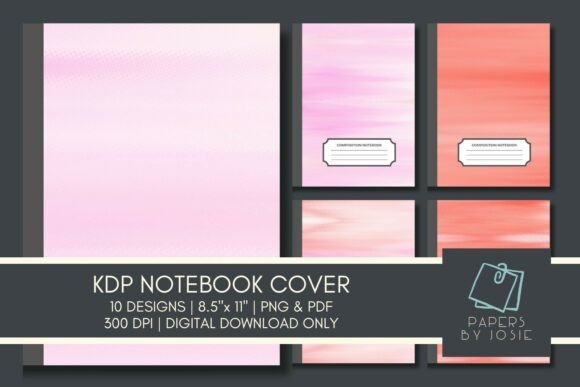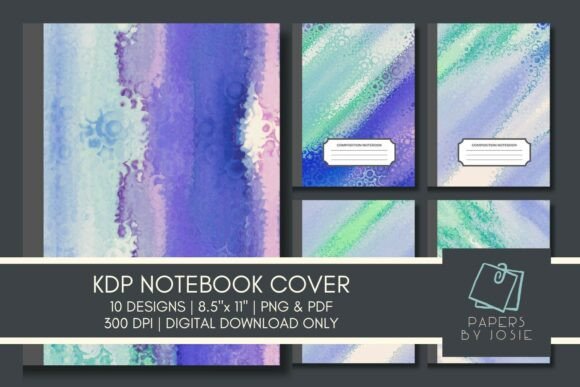
Watercolor Effect KDP Notebook Cover: A Smart Foundation for Your Low-Content Publishing Business
If you are building a low-content publishing business on Amazon KDP, you have likely noticed that notebooks with an artistic, handcrafted feel tend to perform better than generic, overly digital-looking designs. The Watercolor Effect KDP Notebook Cover is a category of design that mimics the soft, organic look of watercolor painting, and it consistently appeals to buyers looking for something personal, creative, or calming. Whether your target audience includes journal writers, students, entrepreneurs, or hobbyists, this aesthetic can help your composition notebook stand out. But choosing a cover is only part of the equation. Many sellers make avoidable mistakes that hurt their sales, their rankings, or their reputation. Understanding what to look for, what to avoid, and how to evaluate a complete package can save you time, money, and frustration.
Why the Watercolor Effect Works So Well for Notebook Covers
The watercolor effect offers something that flat, solid-color covers rarely achieve: a sense of depth, texture, and emotional warmth. Buyers browsing through hundreds of similar products often stop on a cover that feels handcrafted or artistic. This is especially true for composition notebooks, which are traditionally plain and institutional. A watercolor cover transforms a basic school supply into a personal accessory. That emotional connection can be the difference between a click and a pass. However, the visual appeal of the cover must be backed by practical quality. If the file resolution is low, the colors are muddy, or the dimensions are off, even the most beautiful watercolor design will not convert well.
The Most Common Mistake: Assuming Any Pretty Cover Will Sell
New sellers often pick a cover based solely on personal taste. They see a watercolor design they like, upload it, and hope for sales. This approach overlooks several critical factors. First, your cover must communicate the intended use of the notebook. A floral watercolor cover may attract a bullet journal enthusiast, but it might not appeal to a student looking for a college ruled notebook for note-taking. Second, the cover must align with Amazon’s technical requirements. Even a stunning design will be rejected or look terrible in the preview if the file is not properly formatted.
Another version of this mistake is assuming that one cover design will work for every audience. You may have purchased a pack of ten watercolor covers, which is a smart move for variety, but you still need to match each design to the right niche. A soft pastel design may suit a gratitude journal, while a bold, abstract watercolor might work better for a creative ideas notebook. Take time to think about who will buy each specific cover, not just whether you personally find it attractive.
Overlooking File Specifications: Resolution, Format, and Bleed
One of the most frequently overlooked details is file quality. The Watercolor Effect KDP Notebook Cover you choose should be delivered at 300 DPI. This is non-negotiable for print-on-demand publishing. A lower resolution will result in a blurry, pixelated cover that looks unprofessional and cheap. Many buyers return notebooks if the cover image is fuzzy, and negative reviews can damage your entire catalog.
You also need to understand the difference between PNG and PDF file types. A PNG file preserves transparency and is excellent for digital mockups or covers that require a transparent background. A PDF file is often preferred for upload to KDP because it maintains formatting and color profile. The product you are considering includes both types, which is ideal because it gives you flexibility. Additionally, check whether the files include bleed. A standard 8.5 x 11 inch notebook cover needs to account for the trim line and bleed area. If the design does not extend past the trim line, you risk white edges after printing.
Another practical consideration is the delivery format. A single ZIP file containing all ten designs is efficient for download, but make sure you can unzip it on your device before purchasing. Some sellers struggle with ZIP files on mobile or tablet, so access a computer if possible.
Misunderstanding the Full Package: Interior and Layout Matter
A great cover is only half the work. The interior of your notebook must meet buyer expectations. The product you are evaluating comes with a college ruled interior with 120 pages. This is a standard, highly popular format for composition notebooks. College rule (usually 7.1mm or 9/32 inch spacing) is preferred by students, writers, and professionals who need room for neat handwriting. Wide rule is better for children, but for the adult audience you are targeting, college rule is the safer choice.
However, 120 pages is worth a second look. Some KDP notebooks use 100 or 110 pages, so 120 gives you a slight edge in perceived value. But you should verify that the interior PDF is correctly formatted for the trim size of 8.5 x 11 inches. If the interior does not match the cover dimensions, Amazon will flag the file during review. Always preview your manuscript in KDP’s online viewer before publishing. Look for consistent margins, proper page numbering (if included), and no stray marks or low-resolution elements.
How to Choose the Right Design from a Multi-Cover Pack
When you purchase a set of ten covers, you have the opportunity to create a small series or test different niches. This is a smart strategy, but only if you evaluate each cover for its specific market potential. For example, a watercolor design with floral elements may appeal to women aged 25 to 45 who use journals for mindfulness or goal setting. A design with abstract geometric watercolor shapes might appeal to creative professionals or students. A nature-inspired watercolor scene could work for a nature journal or travel diary.
Do not assume that all ten covers will sell equally well. Instead, create separate KDP listings for each cover and tailor the title, subtitle, and keywords to the specific audience. For instance, a notebook with a soft blue watercolor cover could be titled “College Ruled Composition Notebook – Soft Blue Watercolor Design for Creative Writing” rather than a generic “Composition Notebook.” This targeted approach helps you compete in smaller, less saturated keyword niches.
What to Check Before You Hit Publish
Before you upload any cover to KDP, run through a short checklist. First, confirm the file dimensions match the trim size you intend to use. The product is listed as 8.5 x 11 inches, so your KDP manuscript should be set to the same size. Second, verify that the cover file is at 300 DPI and in the correct color space (RGB for digital, CMYK for print; KDP accepts RGB, but many printers prefer CMYK). Third, open the ZIP file and inspect each cover individually. Look for any pixelation, color banding, or artifacts that might indicate a low-quality source file. Fourth, upload a test interior PDF to KDP and use the preview tool to flip through the entire notebook. Check that the college ruling is aligned and that the margins are even. Finally, order a physical proof copy before you launch. This is the only way to see how the watercolor effect translates to print. Colors can look different on screen, and you want to be sure the cover looks as elegant in hand as it does on the listing.
Building a Brand with Consistent Design Choices
If you plan to publish multiple notebooks, consider using your ten watercolor covers as the foundation of a branded series. Buyers who enjoy one notebook may look for more from the same creator. Consistent design elements—such as the same spine style, similar color palettes, or a logo on the back cover—help build recognition. You do not need to use all ten covers at once. Start with two or three that you believe have the strongest appeal, gather feedback from reviews and sales data, then expand. This iterative approach reduces risk and helps you learn which watercolor styles resonate most with your audience.
Final Thoughts on Choosing a Watercolor Effect Notebook Cover
The Watercolor Effect KDP Notebook Cover you choose can be a powerful asset for your KDP business, but only if you treat it as part of a larger system of quality. Beautiful design alone will not compensate for poor file preparation, mismatched interior formatting, or a vague listing strategy. By paying attention to resolution, file type, interior compatibility, and audience targeting, you give your notebook the best chance of attracting customers and earning positive reviews. The ten designs in this pack offer variety and flexibility, and with the college ruled interior and standard trim size, you have a solid foundation. Take the time to prepare each listing carefully, test your files, and think about who each cover serves. That thoughtful approach is what separates successful low-content publishers from those who wonder why their beautiful notebooks never sell. And if you want even more design options, check the full shop for additional watercolor styles that might fit your next project.