Positivity Planner: A Thoughtful KDP Interior for Modern Creators
If you've ever tried to build a planner from scratch inside Canva or InDesign, you already know the pain. The margins drift. The page numbers refuse to align. The gratitude prompts feel generic by page three. It's not that the idea is bad—it's that the execution eats up hours you could have spent marketing, designing your next product, or simply stepping away from the screen. The Positivity Planner was built to solve that friction without sacrificing your creative stamp.
This is a KDP interior that treats you like a professional, not someone who needs handholding. It gives you a clean, thoughtful structure for a positivity-focused journal while handing over full control of the look, feel, and layout. Whether you're a small publisher building your brand or a designer testing a new niche, the goal here is simple: make planning effortless, keep it customizable, and deliver everything in formats that actually work across print and digital.
What Actually Sets This Interior Apart
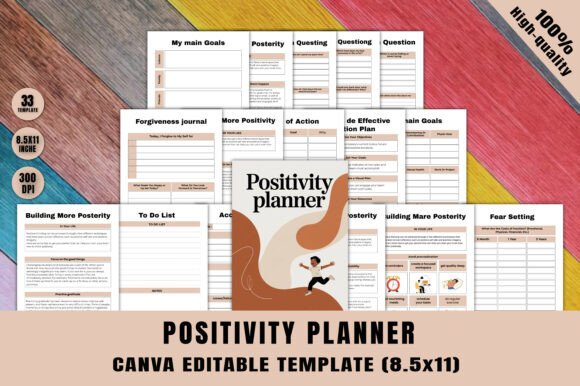
At first glance, you might think another gratitude journal, another list of prompts. But the Positivity Planner differentiates itself through its structural versatility and the depth of its content pages. You are not locked into a rigid daily spread that forces the same five questions every single day. Instead, the 33 professionally designed pages include everything from a Building More Positivity page to a dedicated Fear Setting spread to an Accountability To Do List. That variety matters because real positivity work is not just about listing three things you are grateful for—it sometimes requires confronting self-critical thoughts, mapping out thinking patterns, or creating an action plan for forgiveness.
The visual personality here leans modern and approachable. Clean lines, generous white space, and a layout that breathes. There's nothing overly decorative or ornamental. The design respects the content rather than competing with it. That makes it especially useful for creators whose audience skews toward minimalism, mental wellness, journaling, or personal development. If your brand voice is calm, supportive, and practical, this interior aligns naturally.
What I find most practical is the inclusion of pages that many pre-made planners skip. The Self-Esteem Worksheet and the Self-Reflection Question pages are not afterthoughts. They are designed with enough structure to guide a user without feeling like a clinical exercise. The My Main Goals spread repeats across two pages intentionally, giving space for both long-term vision and short-term steps. That kind of intentional duplication is rare in budget-friendly KDP interiors, and it signals that someone actually thought about how people use a planner over weeks and months, not just on day one.
Where the Positivity Planner Works Best
This interior is not a one-size-fits-all template, and that is its strength. It fits naturally into several distinct project types, and understanding those fit points helps you position it correctly.
For low-content and KDP publishers: This is your core use case. The file includes a print-ready PDF at 300 DPI with standard letter size 8.5 x 11 and no bleed. That eliminates a major headache for Amazon uploads. You can publish it as a standalone guided journal or bundle it into a larger wellness series. The 100 customizable source file means you can swap out entire sections, reorder pages, or add your own branding without rebuilding the document from zero.
For content creators and bloggers: If you sell digital products on Etsy or Gumroad, the included JPG and PNG files let you offer instant download versions. The editable Canva template link means customers can personalize their own copy, which increases perceived value and reduces support requests. I have seen creators bundle the PDF with a Canva link as a upsell, and it converts well because buyers understand they are getting both a finished product and the ability to tweak it.
For coaches, therapists, and workshop facilitators: The positivity-focused structure works exceptionally well as a workbook supplement. The Positive Self-Talk page versus Self Critical Thoughts layout is particularly useful in group settings. You can distribute it as a take-home resource or use it to structure a session. Because the design is clean and not overly branded, it can sit comfortably alongside your own materials without clashing visually.
For brand strategists and small business owners: If you are building a product line around wellness, self-care, or personal development, this interior gives you a consistent foundation. You can customize the "This Journal Belongs To" page to include your logo and brand colors, then use the same visual language across multiple planner volumes. Consistency like that builds recognition faster than a series of disparate one-off designs.
How the Design Influences Readability and Brand Perception
Typography in a planner is not decorative; it is functional. The Positivity Planner uses a layout that prioritizes legibility and task completion. The headings are clear without being shouty. The journaling lines are spaced generously enough for handwriting, including for users who write larger or have motor coordination considerations. That may sound like a small detail, but it is exactly the kind of thing that separates a planner someone actually uses from one they abandon after a week.
From a brand perception standpoint, this interior communicates that you care about the user experience. The no-bleed layout means nothing gets cut off at the margins. The high-resolution output ensures that any custom graphics or text you add remain crisp. If you are selling to an audience that values aesthetics and functionality equally—which describes most wellness buyers—this level of polish reinforces trust.
The lack of a prescribed font family in the default template is actually a deliberate advantage. Because the interior is editable in Canva, you can pair it with your own chosen typefaces. If your brand identity leans toward a modern sans serif font for a clean, contemporary feel, you can apply that consistently. If you prefer a more organic handwritten font for the prompts, that works too. The structure is neutral enough to support a wide range of typographic choices without fighting them.
That flexibility directly impacts audience engagement. A planner that feels generic gets ignored. A planner that feels personal—because the colors, fonts, and tone match the user's taste—gets used. By giving you the tools to customize the interior without rebuilding it, the Positivity Planner makes it easier to create that personal connection at scale.
Practical Guidance for Making the Most of This Interior
Before you download and start editing, it helps to think through a few decisions that will save you time later.
Evaluate your project fit honestly. If your audience is looking for a highly structured daily planner with time blocks and habit trackers, this interior is not that. It is a positivity-focused journal with guided reflection pages, goal setting, and accountability tools. That distinction matters for your product description and for customer satisfaction. Describe it accurately: a guided positivity planner with customizable prompts and goal-setting frameworks, not a daily productivity system.
Test your font pairing early. Because you have full control, resist the temptation to use more than two typefaces. Pick one for headings and one for body text, and stick with it throughout the entire interior. A script font can work beautifully for the "This Journal Belongs To" page, but use it sparingly in the journaling prompts where readability matters more. I usually recommend a clean sans serif font for the body and a friendly serif font or handwritten font for the section headers. That combination feels warm without sacrificing legibility.
Review the included pages and consider your audience's journey. The 33 pages are organized thoughtfully, but you might want to reorder them based on how your customers think. For example, putting the "My Main Goals" pages earlier in the sequence might work better for goal-oriented users, while leading with "Gratitude Journal" pages might suit an audience looking for emotional reflection. The editable Canva template makes this kind of reorganization trivial.
Pay attention to commercial licensing. The Positivity Planner itself is a design asset for creating products. But any fonts or graphics you add during customization may carry their own licensing requirements. If you are selling the final product commercially, make sure your chosen design assets include a commercial license. This is a common oversight that causes problems later, especially when publishing on Amazon KDP or Etsy.
Use the file formats strategically. The PDF is your primary print-ready file. The JPG and PNG versions are excellent for digital mockups, preview images, or low-resolution samples to show in your product listings. The Canva template link is your long-term asset. Store it somewhere accessible, because you may want to create seasonal variations or updated editions without starting over.
Why This Interior Deserves a Spot in Your Product Line
There are hundreds of planner interiors available, and most of them fall into two camps: either they are so rigid that your brand gets lost, or they are so bare that you end up designing everything yourself. The Positivity Planner sits in the productive middle. It gives you a complete, professional structure while handing you the keys to customize it fully. That balance is harder to find than it should be.
The 300 DPI resolution and no-bleed layout remove the most common technical frustrations from KDP publishing. The 100 customizable source file means you are not locked into someone else's design choices. And the thoughtful page selection—from Positive Self-Reflection to Fear Setting to the Plan of Action spread—shows an understanding that positivity is not about ignoring difficulty. It is about engaging with it constructively.
Whether you are launching your first KDP product or adding a new title to an established wellness brand, this interior gives you a solid foundation. The real work, as always, is in how you position it, customize it, and connect it to your audience's needs. But the heavy lifting of layout, structure, and file preparation is already done. That lets you focus on the part only you can do: making it yours.