ADHD Mood Energy Tracker: A Gentle Path to Understanding Your Brain’s Rhythms
Living with ADHD means waking up to a different version of yourself each day—sometimes even each hour. One morning you feel focused, capable, and ready to conquer your to-do list. By afternoon, your energy has dropped, your mood feels fragile, and even simple tasks seem overwhelming. This isn’t a personal failing; it’s how the ADHD brain naturally operates. Yet many adults with ADHD carry the weight of frustration, self-criticism, and confusion about these unpredictable shifts. The ADHD Mood Energy Tracker was created to change that relationship—not by forcing structure, but by offering a gentle, judgment-free tool for self-awareness.
This printable tracker doesn’t ask you to be perfect. It doesn’t require streaks, achievements, or rigid daily entries. Instead, it invites you to check in with yourself, notice your patterns, and build a deeper understanding of your unique rhythms. By tracking mood, energy, and daily influences without pressure, you can begin to work with your brain rather than against it.
Why Adults with ADHD Need a Different Kind of Tracker
If you’ve tried other mood or habit trackers before, you know the pattern: a few days of enthusiasm, followed by guilt when you miss a day, and eventually abandonment of the whole system. Standard trackers are built for neurotypical brains that can maintain consistency, recover quickly from disruptions, and feel motivated by visual progress bars. For adults with ADHD, these tools often backfire. The emphasis on streaks and perfection can trigger shame cycles, making you feel worse about yourself instead of more empowered.
The ADHD Mood Energy Tracker flips that paradigm. It is built on the understanding that your energy and mood are not linear. They fluctuate based on sleep, nutrition, stress, medication timing, sensory overload, and a hundred other variables. Instead of fighting these fluctuations, the tracker helps you observe them with curiosity. This leads to a practical outcome: when you understand what influences your energy and mood, you can make small, realistic adjustments that genuinely support your well-being.
Understanding the Daily Landscape of ADHD Mood and Energy
Adults with ADHD commonly experience emotional dysregulation alongside attention challenges. This means your emotional responses can feel more intense, more sudden, and harder to control. You might snap at a loved one over something minor, feel crushed by a small setback, or experience waves of excitement that burn out quickly. Energy levels can follow a similar pattern—hyperfocus for hours on something that interests you, followed by a crash that leaves you unable to do basic tasks.
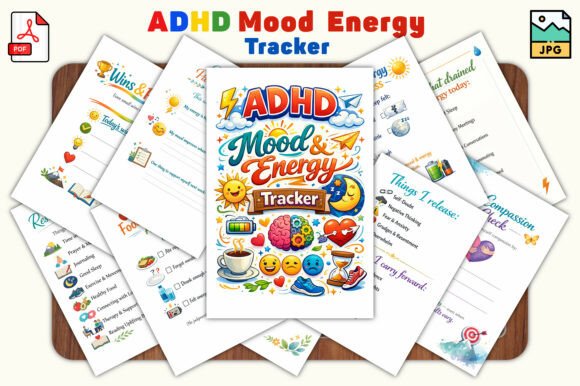
The ADHD Mood Energy Tracker helps you map this landscape. Each page includes prompts that ask you to note your mood and energy at specific points in the day. It also includes space for tracking sleep, food, hydration, and any triggers or stressors you encountered. Over time, you begin to see patterns emerge. Maybe you notice that your energy drops sharply two hours after lunch, or that your mood is more stable on days when you start the morning with protein instead of sugar. These insights are not about control—they are about awareness, and awareness is the foundation of self-compassion.
How the Tracker Supports Emotional Regulation and Burnout Prevention
One of the most valuable applications of the ADHD Mood Energy Tracker is its role in preventing burnout. Many adults with ADHD push themselves too hard during periods of high energy, only to crash later. By recording your energy levels daily, you can learn to pace yourself. You might see that you typically have two to three high-energy hours per day, and you can choose to protect those hours for tasks that require deep focus. During lower-energy windows, you can plan rest or low-demand activities without guilt.
The tracker also supports emotional regulation by helping you identify triggers. Perhaps you notice that your mood dips predictably after certain meetings, or that you feel irritable when you haven’t eaten for several hours. These patterns become data points, not judgments. Once you know that a particular situation tends to affect your mood, you can prepare for it—maybe by scheduling a short break afterward, keeping a snack handy, or using a grounding technique you’ve learned in therapy.
This approach builds self-compassion naturally. Instead of telling yourself “I’m so moody and unpredictable,” you can recognize “My brain has patterns, and I am learning to work with them.” That shift in internal language is powerful for long-term mental health.
Practical Ways to Use the ADHD Mood Energy Tracker in Daily Life
Different people will use the tracker in different ways, and that flexibility is part of its design. Some adults prefer to check in once at the end of the day, reflecting on their overall mood and energy. Others find it more helpful to make brief notes two or three times throughout the day, capturing shifts as they happen. There is no wrong method. The goal is to find a rhythm that feels sustainable for you.
For example, consider a user named Alex. Alex works in a demanding job and often feels irritable by late afternoon without understanding why. By using the ADHD Mood Energy Tracker for two weeks, Alex notices a clear pattern: mood declines around 3 p.m. most days, and this decline is preceded by low energy and skipped lunches. With this awareness, Alex starts bringing a high-protein snack to work and scheduling a five-minute walk in the early afternoon. Within a week, the late-afternoon irritability becomes less intense and easier to manage.
Another user, Maria, struggles with motivation and feels frustrated when she can’t sustain focus. She starts using the tracker to note her energy levels alongside her activities. She discovers that her energy is highest between 9 a.m. and 11 a.m., and that she tends to feel scattered after 2 p.m. Instead of fighting this, she begins scheduling important work tasks in the morning and leaving routine administrative work for the afternoon. Her productivity improves, but more importantly, her self-criticism decreases. She stops blaming herself for being lazy and starts seeing her energy patterns as useful information.
The Role of Brain-Body Awareness in ADHD Management
The ADHD Mood Energy Tracker includes dedicated pages for brain-body awareness and emotional regulation reflections. These sections encourage you to notice physical sensations alongside emotional states. For many adults with ADHD, the body sends signals long before the mind registers a mood shift. A tight chest, shallow breathing, or a feeling of restlessness can be early indicators of overwhelm or frustration. By tuning into these signals, you can intervene earlier and more effectively.
For instance, if you notice that your shoulders become tense whenever you are about to transition from one task to another, you can build in a brief grounding exercise before those transitions. Over time, these small practices reduce the stress associated with shifting focus, making daily life smoother. The tracker becomes a tool not just for recording but for learning how your body and brain communicate.
Supporting Sleep, Nutrition, and Hydration Awareness
The ADHD Mood Energy Tracker also includes prompts for sleep quality, food intake, and hydration. These elements are often overlooked in standard mood tracking, but they are especially critical for adults with ADHD. Poor sleep dramatically affects executive function, emotional regulation, and impulse control. Dehydration can mimic fatigue and brain fog. Skipping meals or eating high-sugar foods can lead to energy crashes that intensify mood swings.
By logging these factors alongside mood and energy, you can spot connections that were previously invisible. Maybe you see that your mood is consistently better on days when you sleep seven hours or more. Perhaps you notice that afternoons are easier when you include protein at lunch. These observations empower you to make informed choices without rigid rules. You are not forced to follow a strict meal plan or sleep schedule—you simply have more data to guide your decisions.
Building an ADHD-Friendly Routine Without Pressure
One of the most common challenges for adults with ADHD is creating and maintaining routines. Traditional advice often backfires by demanding consistency and structure that the ADHD brain struggles to sustain. The ADHD Mood Energy Tracker offers a different path. Instead of prescribing a routine, it helps you discover your own natural rhythms. When you know when you have the most energy, when your mood is most stable, and which factors drain or replenish you, you can design a flexible routine that actually works for you.
This might mean scheduling creative work during your peak energy hours, leaving low-energy times for rest or easy tasks, and building in small breaks before your mood typically dips. The routine is not imposed from the outside—it emerges from your own data. This makes it easier to stick with because it feels aligned with your actual experience, not a neurotypical ideal.
A Tool for Therapy, Coaching, or Personal Reflection
Many adults use the ADHD Mood Energy Tracker in combination with therapy or ADHD coaching. The pattern insights you gather can be shared with a professional to inform treatment decisions, medication adjustments, or behavioral strategies. For example, if you notice that your energy consistently crashes three hours after taking medication, you and your doctor can explore timing adjustments. If you see that your mood is consistently low on days with high social demands, you and your therapist can work on social energy management techniques.
Even if you use the tracker solely for personal reflection, it becomes a trusted document of your lived experience. Over weeks and months, you accumulate a record that counters the distorted self-perceptions that ADHD often creates. You have evidence of your patterns, your strengths, and your challenges. This record reduces the power of negative self-talk because you are looking at real data, not assumptions.
Getting Started with the ADHD Mood Energy Tracker
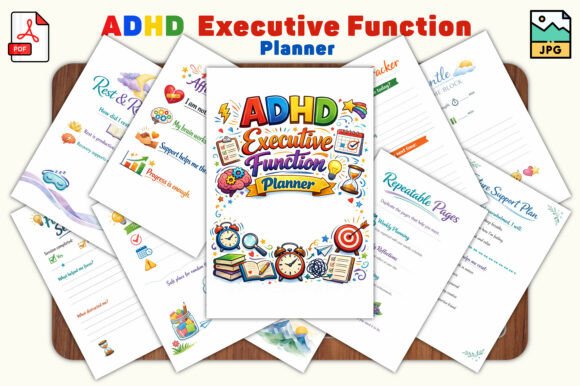
The ADHD Mood Energy Tracker is designed as a 30-page printable resource in both JPG and PDF formats, with a clean, minimal layout on white background. The 6-by-9-inch size makes it easy to carry in a bag or keep on a desk. There are no complicated instructions or steep learning curves. Simply choose a way to use it that feels manageable for you—maybe once per day, maybe a few times per week. The goal is not to fill every page perfectly. The goal is to build a gentle practice of noticing yourself without judgment.
Start by paying attention to one or two factors that feel most relevant to you right now. If energy crashes are your biggest frustration, focus on logging energy levels and sleep. If emotional reactivity is your priority, focus on mood check-ins and triggers. You can expand over time as the practice becomes more natural. The ADHD Mood Energy Tracker meets you where you are, and that is exactly what makes it useful for the long term.
The Real Outcome: Working with Your Brain, Not Against It
At its core, the ADHD Mood Energy Tracker is about shifting your relationship with yourself. Living with ADHD is challenging enough without adding layers of guilt and self-blame. This tool offers a different narrative—one where your fluctuations are not flaws, but information. By tracking mood, energy, sleep, nutrition, and emotional triggers, you build a personalized map of your inner world. That map helps you make kinder, smarter decisions about how to spend your time and energy.
The practical outcome is not a perfectly structured life. It is a life that feels more manageable, more understood, and more compassionate. You learn to recognize when you need rest instead of pushing through. You learn to protect your high-energy windows for what matters most. You learn that your mood and energy are not random—they follow patterns that you can observe and gently influence. This is not productivity hacks or discipline tricks. It is genuine self-understanding, and that is something every adult with ADHD deserves.
Whether you are new to mood tracking or have tried other systems that didn’t stick, the ADHD Mood Energy Tracker offers a fresh approach built on flexibility, awareness, and freedom from perfectionism. It is not about fixing yourself. It is about knowing yourself—and that knowledge is the foundation of truly sustainable change.