Ultimate Fitness Weight Loss Planner: A Practical Guide to Using It Effectively
When you decide to take your health seriously, the tools you choose matter more than you might think. The Ultimate Fitness Weight Loss Planner offers a structured way to track workouts, nutrition, habits, and daily progress—all in one place. It comes as a printable planner with an editable Canva template, making it suitable for personal use, coaching clients, or even resale through KDP. But like any tool, its value depends entirely on how you use it. Many people download such planners with good intentions, only to abandon them within weeks. Understanding common pitfalls ahead of time can save you frustration and help you actually achieve the results you are after.
Why the Ultimate Fitness Weight Loss Planner Attracts So Much Interest
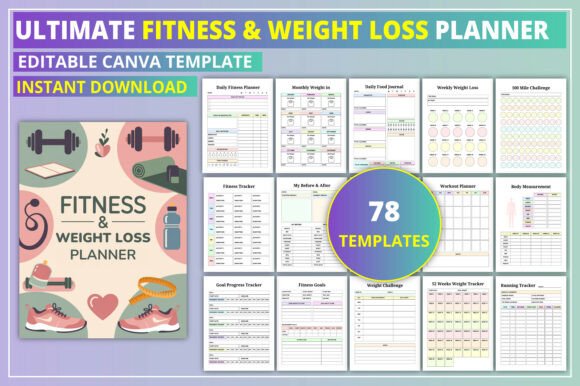
This planner covers a lot of ground. It includes daily and weekly fitness trackers, monthly overviews, goal-setting pages, reflection prompts, diet journals, meal planners, recipe cards, and even before-and-after photo pages. That breadth is appealing because it promises a complete system. You do not need to piece together separate notebooks or apps. Everything is in one download, ready to print and customize. For someone serious about losing weight or building a healthier lifestyle, that kind of organization can be a game changer. But the very feature that makes it attractive—its comprehensiveness—also creates the most common mistakes people make when using it.
Mistake One: Trying to Use Every Page from Day One
The biggest error people make with a planner this complete is attempting to fill out every section immediately. They print all fifty-plus pages, start tracking everything at once, and quickly feel overwhelmed. Within a week, they miss a few entries. Guilt sets in. The planner becomes a reminder of failure rather than a tool for progress.
A better approach is to start small. Pick three or four pages that address your most immediate needs. If your main focus is nutrition, begin with the Daily Diet Plan, the Food Diary, and the Weekly Meal Plan. Use those consistently for two weeks. Once they feel routine, add the Daily Fitness Planner or the Fitness Log. Gradually introduce the Monthly Check In and the Goal Progress Tracker. This gradual layering builds momentum instead of burnout. The planner is designed to support you over time, not to be completed in a single week.
Mistake Two: Ignoring the Reflection and Journaling Components
Many people gravitate toward the trackers and logs because those feel productive. Filling in numbers and checkboxes gives a sense of accomplishment. The Fitness Reflection page and the Daily Wins Journal often get skipped because they require more thought. That is a missed opportunity. Reflection is where you connect your actions to your emotions, your habits to your results. Without it, you end up repeating the same patterns without understanding why.
Set aside five minutes at the end of each day to write a brief reflection. What went well? What felt difficult? Did you notice any cravings or energy shifts? Over time, these notes reveal patterns that no tracker can capture. You might discover that you overeat on days when you sleep poorly, or that your best workouts happen after a balanced breakfast. That insight allows you to adjust your habits intelligently rather than just pushing harder in the wrong direction.
Mistake Three: Treating Weight as the Only Measure of Success
The Monthly Weight In page is straightforward and tempting to prioritize. But weight fluctuates for many reasons—water retention, hormonal changes, muscle gain, digestion timing. Relying on that single number to gauge your progress can lead to unnecessary discouragement or misplaced confidence.
The planner includes several pages that track more meaningful metrics. The Fitness Tracker lets you record reps, sets, distances, or durations. The Goal Progress Tracker shows how far you have come toward specific objectives. The My Journey page provides space for broader reflections on energy, mood, and confidence. Use these alongside the weight log. If the scale does not move one week but you lifted heavier or walked further, that is genuine progress. The planner helps you see the full picture, but only if you choose to look at it.
Mistake Four: Using the Planner Passively Instead of Actively
It is easy to fall into the habit of recording what happened at the end of the day. You log your meals, check off your workout, and move on. That is better than nothing, but it misses the planner's real power: forward planning. The pages are designed to help you decide what you will do before you do it.
Use the Weekly Meal Plan to map out your meals for the coming week. Use the Weekly Fitness Tracker to schedule your workouts block by block. When you plan ahead, you reduce decision fatigue and make it easier to follow through. The act of planning itself shifts your mindset from reactive to proactive. You stop hoping you will make good choices and start intentionally creating them. That is where the planner earns its keep.
Mistake Five: Overlooking the Customization Options
Because the Ultimate Fitness Weight Loss Planner comes as an editable Canva template, you can adjust colors, fonts, layouts, and even remove or add pages. Many people skip this step. They print the planner as-is and try to fit their life into its structure. That works for some, but for many others, small mismatches create friction. Maybe the daily layout does not have enough space for your meals. Maybe the font feels too small or too busy. Maybe you prefer a different color scheme that feels more motivating.
Take twenty minutes to customize the template before printing. Change the font to something clean and readable on paper. Adjust the layout so each section has enough room for your handwriting. If you are a coach or creator, match the colors to your brand. If you are using it for yourself, choose colors that feel calming or energizing. A small investment in customization makes the planner feel like yours, which increases the likelihood that you will use it consistently.
Mistake Six: Not Integrating the Diet and Fitness Pages
The planner separates diet and fitness into distinct sections, which makes sense for organization. But some users treat them as completely independent. They log workouts in the fitness section and meals in the diet section without ever cross-referencing them. That is a missed opportunity because nutrition and exercise are deeply interconnected. Your workout performance affects your appetite. Your meal timing affects your energy during exercise.
Take a moment each week to look at your fitness log alongside your food diary. Notice if heavy workout days are followed by higher food intake or specific cravings. Notice if certain meals give you more energy for your workouts. This cross-check does not require extra effort—it is simply a matter of looking at the data you already collected. Over time, you will spot patterns that help you fine-tune both your training and your eating habits.
What to Check Before You Buy or Download
Before you commit to any planner, consider a few practical points. First, check the page count and the file format. The Ultimate Fitness Weight Loss Planner includes many pages, so printing the full set requires paper and ink. Decide whether you want a binder, a spiral-bound notebook, or loose pages in a folder. Second, confirm that the Canva template is compatible with your device and that you have a free Canva account if needed. Third, look at the sample images carefully. Make sure the layout matches the way you naturally think and plan. Some people prefer structured tables; others need more open space for written notes. Fourth, if you plan to use this for KDP or resale, verify the licensing terms. The product is described as KDP ready, but always double-check what modifications and distribution rights are included.
Practical Steps for Getting the Most Out of the Planner
Start by printing only the pages you will use in the first month. The Belongs To page, My Starting Stats, Daily Fitness Planner, Weekly Meal Plan, and Daily Wins Journal are a good starting set. Fill in your starting stats honestly—measurements, current habits, and any health considerations. Set two or three realistic goals for the next four weeks. Use the Weekly Fitness Tracker to schedule your workouts and the Weekly Meal Plan to outline your eating pattern. At the end of each day, spend two minutes on the Daily Wins Journal. At the end of each week, flip to the Fitness Reflection page and write a few sentences about what worked and what did not. At the end of the month, use the Monthly Check In and Goal Progress Tracker to evaluate your direction. Adjust your goals and pages for the next month based on what you learned.
This rhythmic approach—daily, weekly, monthly—creates a sustainable cycle of planning, action, reflection, and adjustment. It turns the planner from a static document into a living system that evolves with you.
Final Thoughts
The Ultimate Fitness Weight Loss Planner is a capable tool, but its effectiveness depends on your approach. Start small, use the reflection pages, track more than just weight, plan ahead, customize the template, and connect your diet and fitness data. Avoid the mistake of treating it as a passive record of your efforts. Treat it as an active partner in your journey. When you use it that way, the planner becomes more than paper and ink. It becomes a structured path toward the habits, health, and confidence you want to build. Take the time to use it thoughtfully, and it will reward you with clarity and consistency that no app or spreadsheet can replicate.